Languages

global warming

English

2016 Hottest year ever. Global warming is worsening.

2016 hottest year ever global warming causes drought

The latest temperature numbers from NASA and the National Oceanic and Atmospheric Administration say the first six months of 2016 were the hottest on record around the planet. Let's look at June. Scientists took temperatures from around the world and got a June average. What they found was a world that was 1.62 degrees Fahrenheit hotter than the average June in the 20th Century. How about January? Hottest ever. Same with February, March, April and May. Every month in 2016 has been warmer than ever, at least since people started keeping reliable records — that was 1880. How much warmer is 2016 so far? Overall, this year has been almost two degrees warmer than what people experienced in the 20th Century. Now, you may remember, last year broke the record for the hottest year ever globally. But Gavin Schmidt, climate scientist and director of NASA's Goddard Institute for Space Studies, says that "2016 has really has blown that out of the water." Schmidt has calculated the chance that the rest of this year will continue on its record pace, based on the first six months. "It indicates that we have roughly a 99 percent chance of a new record in 2016," he says. About 70 percent of Earth is covered by clouds at any given moment. Their interaction with climate isn't easy to study, scientists say; these shape-shifters move quickly. A Warming World Means Less Water, With Economic Consequences. Now, a couple of degrees warmer overall may not sound like much; it changes more than that in a day.

Billion people face global flooding risk

A British aid charity is warning that by 2060 more than a billion people worldwide will live in cities at risk of catastrophic flooding as a result of climate change.

A study by Christian Aid says the US, China and India are among the countries most threatened.

It says the Indian cities of Kolkata and Mumbai will be most at risk.

The eight most vulnerable cities on the list are all in Asia, followed by Miami in the US.

The report urges governments to take action to reduce global warming and invest in disaster reduction programmes.

Dr Alison Doig, the report's author, told the BBC World Service that people living in large coastal cities were particularly at risk.

"I think it's cities like Kolkata, Dakar, the big mega-cities of the south and the emerging economies where the people are most vulnerable to exposure to sea-level rises and to higher rain events," she said.

"Flooding in these cities can cause massive damage, but can also threaten life."

Dr Doig warned that Florida was likely to suffer extensive flooding.

"The whole of Florida is totally vulnerable," she said.

"It is so low-lying, it is virtually swampland reclaimed. So significant climate change... raising water half to a full metre this century, will take out an awful lot of Florida and a significant amount of Miami."

Horrible extinction risk to plants - May 2016

Scientists have published their first global assessment of the state of the world's plants.

They warn that 21% of all plants are at risk of extinction and face a broad range of threats.

The research was carried out by the Royal Botanic Gardens Kew in the UK.


See the full report:   here

Islands, land disappearing because of global warming and rising sea levels - 2016

Five of the Solomon Islands have submerged underwater and six more have experienced a dramatic reduction in shoreline due to man-made climate change, according to a paperpublished in the journal Environmental Research Letters.

The Solomon Islands, a sovereign country consisting of a network of picturesque, tropical islands located in the Pacific Ocean, has a population of a little more than 500,000 people, according to census data published in 2009, many of whom have been adversely affected by rising sea levels in recent years.

Ten houses from one island were washed away at sea between 2011 and 2014, according to the study, which asserts that the rising sea levels affecting the Solomon Islands are caused by the warming of the planet.

The research, which was conducted by Australian scientists, bears implications that are likely to reverberate far beyond the turquoise shores of Oceania.

COP 21 News - Nov 30 to Dec 11 2015 Paris

COP 21 News - November 30 to December 11 2015 in Paris

The COP 21 United Nations sponsored global conference on the environment, global warming, rising sea levels, extinction, overpopulation, pollution and sustainable development is being held in Paris from November 30, 2015 to December 11, 2015.

We will put reports and info from the conference here.

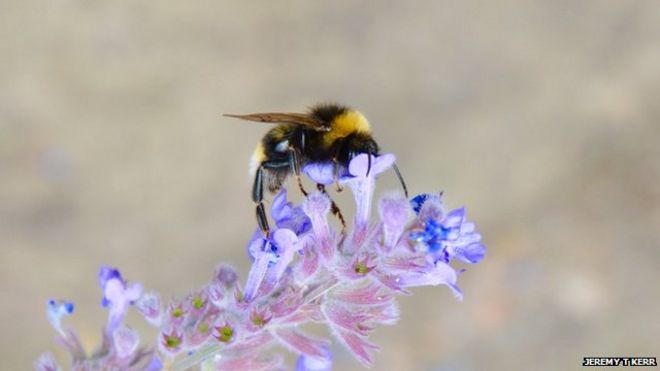
Global warming threat to Bumblebee

Climate change constricts bumblebees' natural ranges

 
bumble bee

Across Europe and North America bumblebees have lost ground to climate change

Earth entering new extinction phase


The Earth  is entering a new extinction phase

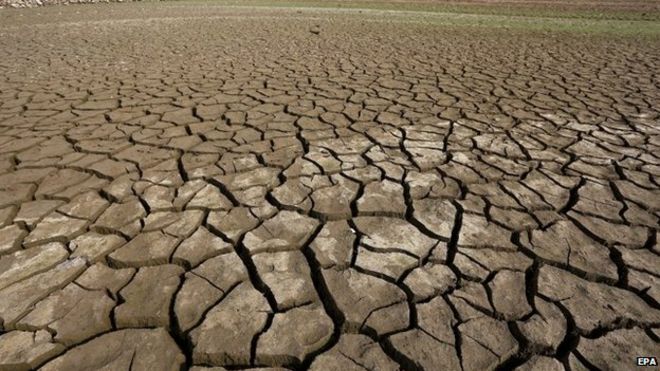
The dried out sea bed of the Soyang River in Chuncheon, Gangwon Province, northeastern South Korea, 16 June 2015

   Climate change and deforestation are among the reasons we may be facing an extinction event

China per capita carbon emissions overtake EU - 2013

electricity production produces pollution, carbon emissions and global warming

New data on carbon shows that China's emissions per head of population have surpassed the EU for the first time. The researchers say that India is also forecast to beat Europe's CO2 output in 2019. Scientists say that global totals are increasing fast and will likely exceed the limit for dangerous climate change within 30 years. The world has already used up two thirds of the warming gases researchers calculate will breach 2 degrees C. The Global Carbon Project involves researchers from several different institutes around the world and it provides objective details on the scale of annual emissions. The latest data shows that a record 36 billion tonnes of carbon from all human sources were emitted in 2013. Top ten emitters 2013 - % of global total China - 29 USA - 15 EU - 10 India - 7.1 Russian Federation - 5.3 Japan - 3.7 Germany - 2.2 Republic of Korea - 1.8 Iran - 1.8 Saudi Arabia - 1.5 The biggest emitters were China, which produced 29% of the total, followed by the US at 15%, the EU at 10% and India at 7.1% But in an interesting development, China's emissions per head of population exceeding those of the European Union for the first time. While the per capita average for the world as a whole is 5 tonnes of carbon dioxide, China is now producing 7.2 tonnes per person, to the EU's 6.8 tonnes. The US is still far ahead on 16.5 tonnes per person. "We now see China's per capita emissions surpassing the EU," said Dr Robbie Andrew, from the Centre for International Climate and Environmental Research in Norway, who was involved in the research.

Caribbean coral reefs becoming extinct

healthy-coral-bermuda_0.jpg
Reef in Bermuda.
Healthy coral reefs have declined by about 50% in the past 40 years

Many of the Caribbean's coral reefs could vanish in the next 20 years, according to a report published by the International Union for the Conservation of Nature (IUCN).

Data from more than 35,000 surveys suggests that habitats have declined by more than 50% since the 1970s.

The report's authors believe that over-fishing and disease is mainly to blame.

They say the trend could continue if nothing is done, but with protection the reefs could bounce back.

Carl Gustaf Lundin, director of IUCN's Global Marine and Polar Programme, said the findings were alarming.

"The reefs support a number of different countries and populations," he said.

"Tourism is one of the biggest industries, and the health of the reef is essential to the well-being of many of the people living there. And of course they are immensely beautiful and wonderful places as well."
coral-overgrown-with-algae-jamaica-2013_0.jpg
Reef overrun with algae The reefs are becoming over-run with algae, which suffocates the coral.

Jet stream changed by Global Warming changing weather patterns

We may have to get used to winters where spells of weather go on for weeks - or even months.

New research suggests that the main system that helps determine the weather over Northern Europe and North America may be changing.

The study shows that the so-called jet stream has increasingly taken a longer, meandering path.

This has resulted in weather remaining the same for more prolonged periods.

The work was presented at the annual meeting of the American Association for the Advancement of Science (AAAS) in Chicago.

The observation could be as a result of the recent warming of the Arctic. Temperatures there have been rising two to three times faster than the rest of the globe.

According to Prof Jennifer Francis of Rutgers University in New Jersey: "This does seem to suggest that weather patterns are changing and people are noticing that the weather in their area is not what it used to be."

“We can expect more of the same and we can expect it to happen more frequently” Prof Jennifer Francis, Rutgers University

The meandering jet stream has accounted for the recent stormy weather over the UK and the bitter winter weather in the US Mid-West remaining longer than it otherwise would have.

"We can expect more of the same and we can expect it to happen more frequently," says Prof Francis

The jet stream, as its name suggests, is a high-speed air current in the atmosphere that brings with it the weather.

It is fuelled partly by the temperature differential between the Arctic and the mid-latitudes.

Pages