Languages

extinction

English

Up to 900 tropical bird species could go extinct.

Up to 900 tropical bird species could 'go extinct'


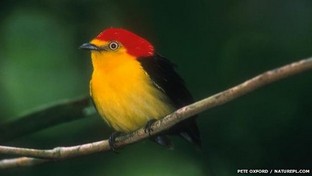
wire-tailed-manakin-312x176.jpg

The wire-tailed manakin faces an uncertain future


Up to 900 species of tropical land birds around the world could become extinct by 2100, researchers say.

The finding is modelled on the effects of a 3.5C Earth surface temperature rise, a Biological Conservation Journal paper shows.

Species may struggle to adapt to habitat loss and extreme weather events, author Cagan Sekercioglu says.

Mountain, coastal, restricted-range, and species unable to get to higher elevations could be the worst affected.


Birds at risk:

Venezuela's scissor-tailed hummingbird          

Rhino Poaching is driving the rhinoceros to extinction.

South Africa troops tackle rhino poachers

Rhinos in a game park in South Africa Rhinos are killed for their horns in many parts of Africa
 

South Africa is to deploy hundreds of extra troops along its borders to help fight gangs smuggling rhino horns, the government has announced.

Justice Minister Jeff Radebe said four military companies would be sent to the borders with Zimbabwe, Swaziland and Lesotho.

Syndicates export the horns from Africa to parts of Asia and the Middle East.

In 2011, a record 450 rhinos were killed by poachers in South Africa, the Department of Environment Affairs says.

Mr Radebe said about 600 soldiers would join the fight against rhino poaching.

"The deployment includes army engineers who are conducting repairs and maintenance on the Zimbabwe-Mozambique border fence, which is approximately 140 kilometres (85 miles)," Mr Radebe said.

Last year troops were deployed along the Mozambican border, many of them inside the world-famous Kruger National Park where more than 200 rhinos were killed last year.

"Effective border management is part of the government crime prevention strategy, which assists to deal with cross-border crime syndicates and curb poaching," said Mr Radebe.

Ocean acidification = habitat loss = extinction

'Jacuzzi vents' model CO2 future

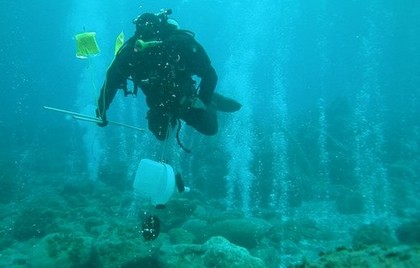
 At these volcanic vent sites, carbon dioxide bubbles up like a Jacuzzi
 

A UK scientist studying volcanic vents in the ocean says they hold a grave warning for future marine ecosystems.

These vents have naturally acidified waters that hint at how our seas might change if atmospheric carbon dioxide levels continue to rise.

They are conditions that would make it harder for corals and similar organisms to make the hard parts in their bodies.

Dr Jason Hall-Spencer's work suggests our oceans could lose perhaps 30% of their biodiversity this century.

The Plymouth University researcher has been presenting his latest findings to a major conference in Vancouver, Canada.

"I am investigating underwater volcanoes where carbon dioxide bubbles up like a Jacuzzi, acidifying large areas of the seabed, and we can see at these vents which types of organisms are able to thrive and which ones are most vulnerable," he told the annual meeting of the American Association for the Advancement of Science (AAAS).

Big Cat Species facing Extinction

Big Cat Species Facing Extinction 2010 was supposed to be the Year of the Tiger. Unfortunately, tigers, lynx, jaguars, leopards, lions, pumas, cheetahs, and every species of Big Cat in the world is in decline. How long these magnificent species can evade extinction is up to us. Big Cats are part of the Family Felidae (or feline), and are a rich addition to our natural world. However, the Big Cats are in severe decline throughout the planet. The Anthropocene Extinction, also known as the Holocene Extinction event, is the world’s 6th great sudden loss of life. We are currently in the third wave of this, and man-made ecological effects such as an overexploitation of species, pollution, the introduction of alien species, and habitat encroachment are directly responsible for the decline and extinction of thousands of species of life.

Pages

Email Addresses