Languages

extinction

English

African forest elephants face extinction

African forest elephants decline by 62% in 10 years

African forest elephants by water
 
African forest elephants face extinction if 'drastic measures' are not taken
 

Forest elephant numbers have decreased by 62% across Central Africa over the last 10 years, according to a study.

The analysis confirmed fears that African forest elephants (Loxodonta cyclotis) are heading for extinction, possibly within the next decade.

Conservationists said "effective, rapid, multi-level action is imperative" in order to save the elephants.

They are concerned the forest elephants are being killed for their ivory.

Results of the study, undertaken by researchers from the Wildlife Conservation Society (WCS), are published in the scientific journal PLoS One.

Over 60 co-authors contributed to the study, which was led by Dr Fiona Maisels, a WCS conservation scientist from the School of Natural Sciences, University of Sterling.

"Although we were expecting to see these results, we were horrified that the decline over the period of a mere decade was over 60%," Dr Maisels told BBC Nature.

Elusive giants

African forest elephants

Earth: Will the age of man be written in stone?

There have been a few times in the history of mankind when we nearly died out as a species. Anthropologists call these events “bottlenecks”, times when the population of humans shrank – perhaps to as few as 2,000 people over 50,000 years ago. At those levels, we would be categorised as an endangered species on the IUCN Red List, existing in even fewer numbers than wild tigers do today. We survived, and in fact we’ve thrived, mainly because we adapted our environment to suit our needs. But to what degree has the survival and triumph of our species changed our planet? The best people to answer this could well be those who have the grandest perspective. Geologists can take a 4.5-billion-year step back and look at the human impact on our planet in the context of its long history – they can identify changes in the rock record within layers of deposited sediments that build up and are compressed over time. There have been plenty of dramatic changes to our planet in the past: this spinning lump of rock has flipped from a “Snowball” Earth to searing temperatures devoid of ice; there have been times when life has flourished, and times when it has been beset by mass extinctions. Big changes in planetary states show up in the rock record as stripes that reveal the sudden disappearance or appearance of certain fossil species, or climatic changes that reveal changes in past sea level.

Invertebrates - Spineless animals under threat of extinction

'Spineless' animals under threat of extinction

A fifth of animals without backbones could be at risk of extinction, say scientists.

Almost 80% of the world's species are invertebrates, meaning they lack a

spinal column.

Reviewing over 12,000 species known to be threatened, biologists found that

freshwater ones are most at risk.

Researchers urged for comprehensive studies of those vulnerable, to help

inform conservation and protect species.


A bug's life


[[{"type":"media","view_mode":"media_crop","fid":"143","attributes":{"alt":"","class":"media-image","id":"media_crop_6114872394187","media_crop_h":"0","media_crop_image_style":"-1","media_crop_instance":"33","media_crop_rotate":"0","media_crop_scale_h":"0","media_crop_scale_w":"0","media_crop_w":"0","media_crop_x":"0","media_crop_y":"0","typeof":"foaf:Image"}}]]


Insects make up a huge proportion of the living organisms on the planet; so you do not have to go far to find them yourself.

2012 - Species Critically Endangered near Extinction on IUCN Red List

Red List counts 'on the brink' species


King cobra
The king cobra is the largest but certainly not the only threatened East Asian snake
 

East Asia's status as the world's main "extinction hotspot" is confirmed in the new Red List of Threatened Species.

Humans killed off Australia's giant beasts

An extinct marsupial mega-herbivore
Scientists have linked a dramatic decrease in spores found
 
in herbivore dung to the arrival of humans in  

Australia 41,000 years ago.


Humans hunted Australia's giant

vertebrates to extinction about 40,000 years ago, the latest research published

in Science has concluded.

The cause of the widespread extinction has provoked much debate, with climate

change being one theory.

However, scientists studied dung samples from 130,000 and 41,000 years ago,

when humans arrived, and concluded hunting and fire were the cause.

The extinction in turn caused major ecological changes to the landscape.

The scientists looked at pollen and charcoal from Lynch's Crater, a

sediment-filled volcanic crater in Queensland that was surrounded by tropical

rainforest until European settlement.

They found Sporormiella spores, which grow in herbivore dung, virtually

disappeared around 41,000 years ago, a time when no known climate transformation

was taking place.

Critically Endangered Sawfish nearing extinction.

critically endangered sawfish nearing extinction on red list of critically endangered species

Sawfish snout senses, swipes and stabs

The exact function of the sawfish's spectacular snout has been unclear, until now

The spectacular snouts of sawfish are

revealed as complete hunting weapons, sensing prey and killing them.

The saws, which can grow more than a metre long in some species, have

previously been identified as able to sense prey by their electric fields.

Now, researchers have filmed the fish impaling prey on the teeth of the

saws. They suggest in Current Biology that

sawfish are more active hunters than previously thought, which could help in their much-needed conservation.


Sawfish are among the most endangered fish in the world


All seven species are listed as Critically Endangered on

the internationally-recognised Red List.

The researchers, mainly based in Australia, suggest sawfish may be unique

among their peers in possessing a snout, or rostrum, that works both as a

sensory organ and a hunting weapon.

Up to 900 tropical bird species could go extinct.

Up to 900 tropical bird species could 'go extinct'


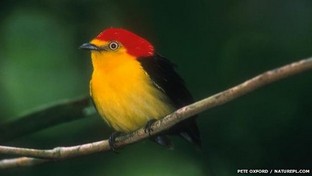
wire-tailed-manakin-312x176.jpg

The wire-tailed manakin faces an uncertain future


Up to 900 species of tropical land birds around the world could become extinct by 2100, researchers say.

The finding is modelled on the effects of a 3.5C Earth surface temperature rise, a Biological Conservation Journal paper shows.

Species may struggle to adapt to habitat loss and extreme weather events, author Cagan Sekercioglu says.

Mountain, coastal, restricted-range, and species unable to get to higher elevations could be the worst affected.


Birds at risk:

Venezuela's scissor-tailed hummingbird          

Rhino Poaching is driving the rhinoceros to extinction.

South Africa troops tackle rhino poachers

Rhinos in a game park in South Africa Rhinos are killed for their horns in many parts of Africa
 

South Africa is to deploy hundreds of extra troops along its borders to help fight gangs smuggling rhino horns, the government has announced.

Justice Minister Jeff Radebe said four military companies would be sent to the borders with Zimbabwe, Swaziland and Lesotho.

Syndicates export the horns from Africa to parts of Asia and the Middle East.

In 2011, a record 450 rhinos were killed by poachers in South Africa, the Department of Environment Affairs says.

Mr Radebe said about 600 soldiers would join the fight against rhino poaching.

"The deployment includes army engineers who are conducting repairs and maintenance on the Zimbabwe-Mozambique border fence, which is approximately 140 kilometres (85 miles)," Mr Radebe said.

Last year troops were deployed along the Mozambican border, many of them inside the world-famous Kruger National Park where more than 200 rhinos were killed last year.

"Effective border management is part of the government crime prevention strategy, which assists to deal with cross-border crime syndicates and curb poaching," said Mr Radebe.

Ocean acidification = habitat loss = extinction

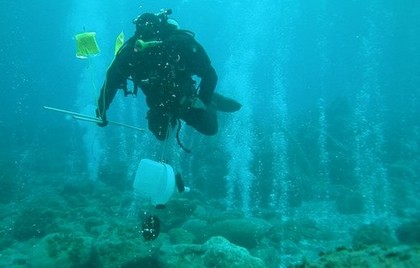
'Jacuzzi vents' model CO2 future

 At these volcanic vent sites, carbon dioxide bubbles up like a Jacuzzi
 

A UK scientist studying volcanic vents in the ocean says they hold a grave warning for future marine ecosystems.

These vents have naturally acidified waters that hint at how our seas might change if atmospheric carbon dioxide levels continue to rise.

They are conditions that would make it harder for corals and similar organisms to make the hard parts in their bodies.

Dr Jason Hall-Spencer's work suggests our oceans could lose perhaps 30% of their biodiversity this century.

The Plymouth University researcher has been presenting his latest findings to a major conference in Vancouver, Canada.

"I am investigating underwater volcanoes where carbon dioxide bubbles up like a Jacuzzi, acidifying large areas of the seabed, and we can see at these vents which types of organisms are able to thrive and which ones are most vulnerable," he told the annual meeting of the American Association for the Advancement of Science (AAAS).

Big Cat Species facing Extinction

Big Cat Species Facing Extinction 2010 was supposed to be the Year of the Tiger. Unfortunately, tigers, lynx, jaguars, leopards, lions, pumas, cheetahs, and every species of Big Cat in the world is in decline. How long these magnificent species can evade extinction is up to us. Big Cats are part of the Family Felidae (or feline), and are a rich addition to our natural world. However, the Big Cats are in severe decline throughout the planet. The Anthropocene Extinction, also known as the Holocene Extinction event, is the world’s 6th great sudden loss of life. We are currently in the third wave of this, and man-made ecological effects such as an overexploitation of species, pollution, the introduction of alien species, and habitat encroachment are directly responsible for the decline and extinction of thousands of species of life.

Pages

Email Addresses