Languages

species

English

Welcome to Extinction .in

Welcome to Extinction.in - the website dedicated to saving species from extinction. Please join us and participate. Publish, blog, translate, learn or teach - once you join you can create your own personal space on this site, and wrote or comment on anything you like. Extinction .in wants to prevent all species from going extinct, and believes that the best way to save the planet is by saving its myriad species. As long as the tiger, lion, whale, bear, wolf, leopard, jaguar, elephant, manatee, gorilla, rhino, eagle, condor, baboon, dolphin, sea lion, seal, hippo, cheetah, mountain lion, polar bear, humpback whale, camel, and all the other species survive; then planet Earth will support human life and continue to nurture life of all kinds, races, species and genome. We believe that we must limit human population and development in order to allow all species, and the Earth itself, to survive in its natural state. We believe that we must stop polluting the planet, stop using pesticides and toxic chemicals, and modify the way we live in order to live in harmony with Nature and all other species. We respect your right to disagree and present your views and opinions here. We strive for a civilized, scientific, intelligent debate that will lead to politiical and environmental change. Join us today, and help save all species from extinction, and in so doing, save human civilization and the planet itself. Thanks for your help and your support.

100,000 people have left federal science agencies since President Trump returned to the White House which Censors Science including Global Warming

Kate Marvel, a widely known climate scientist and author, has resigned from her position at NASA, citing the Trump administration’s attacks on climate science in the United States.

Dr. Marvel, who trained as an astrophysicist before turning to the Earth’s atmosphere, said in an interview that the administration’s actions made it impossible to remain at an agency that she loved.

“It wears you down after a while,” said Dr. Marvel, who announced her resignation on Tuesday. “None of my internally funded science projects were funded. I wrote a couple other proposals, which, as far as I know, have fallen into a black hole.”

Bethany Stevens, a NASA spokeswoman, declined to answer questions about Dr. Marvel’s resignation, saying “it would be inappropriate for the agency to comment on personnel matters.”

Dr. Marvel joins an estimated 95,000 employees who have left federal science agencies through layoffs, retirements or resignations since Mr. Trump returned to the White House last year. Of those, an estimated 10,000 held doctorate degrees in the sciences.

UN Climate Report states Earth is Out of Balance and faces Dangerous Warming

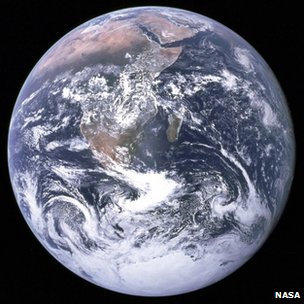
The Earth is out of balance.

That’s the message from a United Nations report released late Sunday that looked at how much energy from the sun is absorbed by the Earth or reflected back into space.

Researchers found the gap between the two is the biggest since measurements began in 1960, meaning more of the sun’s heat energy is now staying on Earth. And that energy imbalance is heating up the oceans, atmosphere, and frozen regions of the world, according to the World Meteorological Organization’s State of the Global Climate report.

Ashkay Deoras, a research scientist at Britain’s National Center for Atmospheric Science at the University of Reading, likened the planet to a heated room with the windows closed.

“If you open the window, naturally, you will allow the hot air to escape,” said Dr. Deoras, who was not associated with the report. “But now what is happening is that, because of all these greenhouse gases, they are just trapping more and more heat. The planet is just not getting a chance to cool down.”

In previous reports, the U.N.-based meteorological organization documented changes in each element of the Earth’s system, such as surface temperatures, ocean heat, melting glaciers and sea level rise. This year, the authors, who include climate scientists and meteorologists, examined shifts on a wider scale.

Humans Are Speeding Extinction and Altering the Natural World at an ‘Unprecedented’ Pace - 2019

WASHINGTON — Humans are transforming Earth’s natural landscapes so dramatically that as many as one million plant and animal species are now at risk of extinction, posing a dire threat to ecosystems that people all over the world depend on for their survival, a sweeping new United Nations assessment has concluded.

The 1,500-page report, compiled by hundreds of international experts and based on thousands of scientific studies, is the most exhaustive look yet at the decline in biodiversity across the globe and the dangers that creates for human civilization. A summary of its findings, which was approved by representatives from the United States and 131 other countries, was released Monday in Paris. The full report is set to be published this year.

Its conclusions are stark. In most major land habitats, from the savannas of Africa to the rain forests of South America, the average abundance of native plant and animal life has fallen by 20 percent or more, mainly over the past century. With the human population passing 7 billion, activities like farming, logging, poaching, fishing and mining are altering the natural world at a rate “unprecedented in human history.”

Birds Aren’t Just Declining. They’re Declining Faster - 2026.

Scientists studying data collected over more than three decades found accelerating losses. Their research offers clues about the causes.

Birds in the United States are not only declining, but they are declining faster, especially in areas with intensive agriculture, according to new research. Overall drops in bird population, measured from 1987 to 2021, were sharpest in warm and warming areas, suggesting that climate change may play a role.

The study, published on Thursday in the journal Science, shows only correlation with intensive agriculture and temperature, not causation. It does not factor in other circumstances that may be affecting birds along migratory routes or while they are overwintering. But it adds to an ever more robust body of evidence that birds — one of the best measured families of animals on Earth, and a sentinel for the health of other species — are not OK.

Whatever the specific drivers, the accelerating losses make sense given society’s focus on economic growth, which often comes at a cost to the natural world, said Peter P. Marra, an ornithologist and dean at Georgetown University who specializes in bird populations and was not involved with the new research.

“The American dream turns into the American nightmare as we start to look at what we’re doing to biodiversity and systems that we depend on as humans,” he said.

Intense Mediterranean Sea heatwave raises fears for marine life - July 2025

Warmer water at the seaside might sound nice for your holiday dip, but recent ocean heat in the Mediterranean Sea has been so intense that scientists fear potentially devastating consequences for marine life.

The temperature of the sea surface regularly passed 30C off the coast of Majorca and elsewhere in late June and early July, in places six or seven degrees above usual.

That's probably warmer than your local leisure centre swimming pool.

It has been the western Med's most extreme marine heatwave ever recorded for the time of year, affecting large areas of the sea for weeks on end.

The heat appears to be cooling off, but some species simply struggle to cope with such prolonged and intense warmth, with potential knock-on effects for fish stocks.

To give you some idea of these temperatures, most leisure centre swimming pools are heated to roughly 28C. Competitive swimming pools are slightly cooler at 25-28C, World Aquatics says.

Children's pools are a bit warmer, recommended at 29-31C or 30-32C for babies, according to the Swimming Teachers' Association.

Such balmy temperatures might sound attractive, but they can pose hidden threats. Harmful bacteria and algae can often spread more easily in warmer seawater, which isn't treated with cleaning chemicals like your local pool.

Three years left to limit warming to 1.5C, leading scientists warn - 2025

The Earth could be doomed to breach the symbolic 1.5C warming limit in as little as three years at current levels of carbon dioxide emissions.

That's the stark warning from more than 60 of the world's leading climate scientists in the most up-to-date assessment of the state of global warming.

Nearly 200 countries agreed to try to limit global temperature rises to 1.5C above levels of the late 1800s in a landmark agreement in 2015, with the aim of avoiding some of the worst impacts of climate change.

But countries have continued to burn record amounts of coal, oil and gas and chop down carbon-rich forests - leaving that international goal in peril.

Climate change has already worsened many weather extremes - such as the UK's 40C heat in July 2022 - and has rapidly raised global sea levels, threatening coastal communities.

"Things are all moving in the wrong direction," said lead author Prof Piers Forster, director of the Priestley Centre for Climate Futures at the University of Leeds.

"We're seeing some unprecedented changes and we're also seeing the heating of the Earth and sea-level rise accelerating as well."

These changes "have been predicted for some time and we can directly place them back to the very high level of emissions", he added.

Tropical forests destroyed at fastest recorded rate in 2024


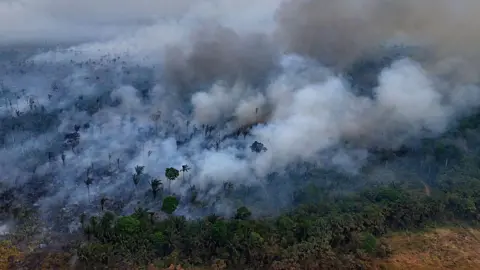
Getty Images Aerial shot of dense green rainforest with thick clouds of smoke rising up into the air

The world's tropical forests, which provide a crucial buffer against climate change, disappeared faster than ever recorded last year, new satellite analysis suggests.

Researchers estimate that 67,000 sq km (26,000 sq mi) of these pristine, old-growth forests were lost in 2024 – an area nearly as large as the Republic of Ireland, or 18 football pitches a minute.

Global Ice Melt to Destroy World's Coastlines - 2025

The world’s ice sheets just got a dire prognosis, and coastlines are going to pay the price

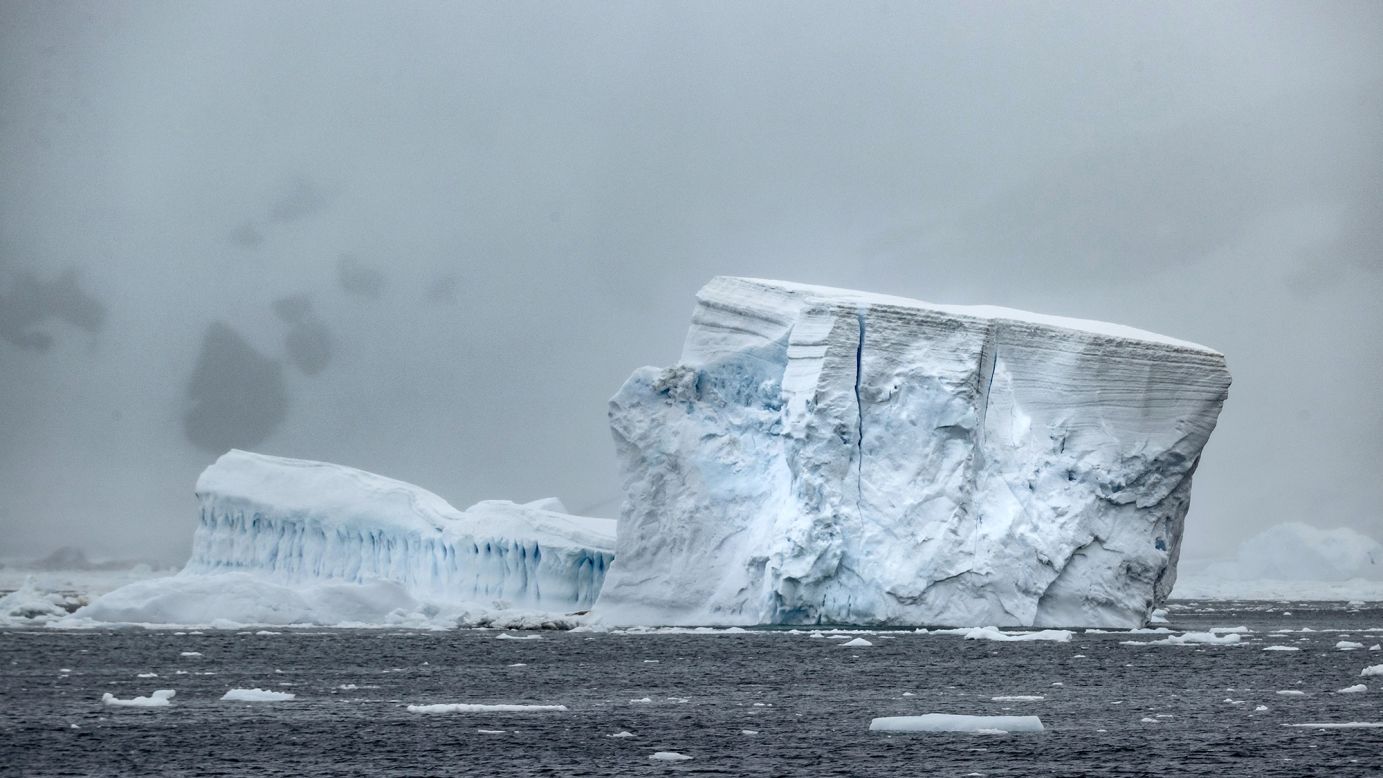
Glaciers in Antarctica on February 7, 2022. A new study suggests even if the world meets its climate targets it may not be enough to save the planet's ice sheets.

Glaciers in Antarctica on February 7, 2022. A new study suggests even if the world meets its climate targets it may not be enough to save the planet's ice sheets. 

The world’s ice sheets are on course for runaway melting, leading to multiple feet of sea level rise and “catastrophic” migration away from coastlines, even if the world pulls off the miraculous and keeps global warming to within 1.5 degrees Celsius, according to new research.

A group of international scientists set out to establish what a “safe limit” of warming would be for the survival of the Greenland and Antarctic ice sheets. They pored over studies that took data from satellites, climate models and evidence from the past, from things like ice cores, deep-sea sediments and even octopus DNA.

Celtic rainforest facing species extinction crisis - 2025


Ben Porter a pool of water beneath a thick forest with craggy branches and moss covered floors. they scene is partially reflected in the water

Temperate rainforest, seen here in the Vale of Ffestiniog, Gwynedd, is found in areas subject to the influence of the sea

An "extinction crisis" is happening in Britain's temperate rainforests where some of the world's rarest mosses, lichens and liverworts are vanishing, ecologists have warned.

Also known as Celtic rainforests, temperate rainforests are found primarily along the UK's western coasts.

Pages

Email Addresses