Languages

pollution

English

Oceans health declining quickly

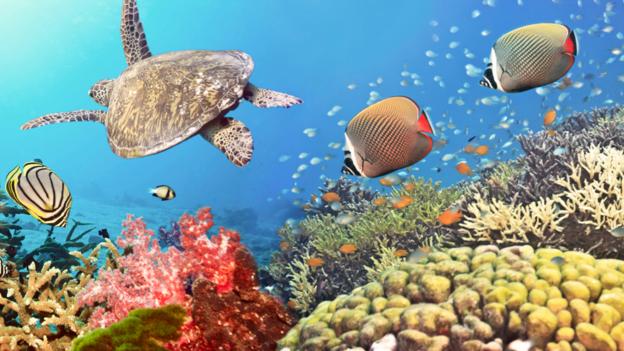
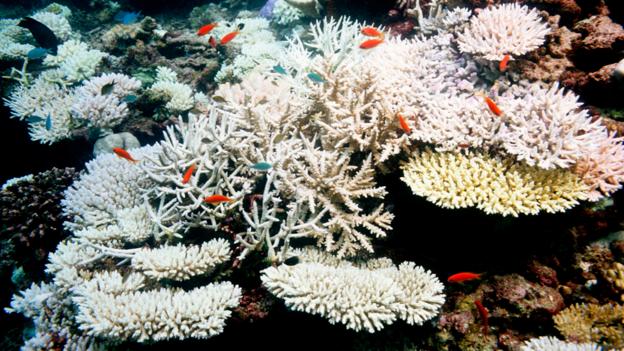
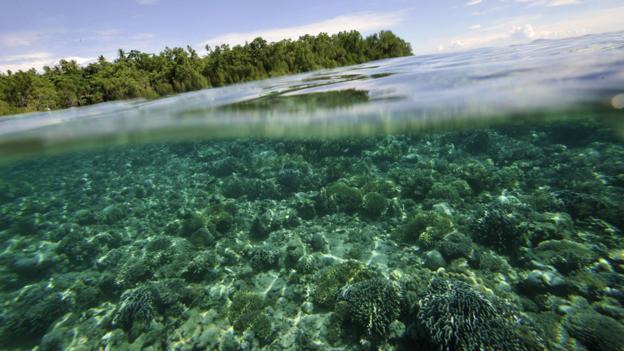
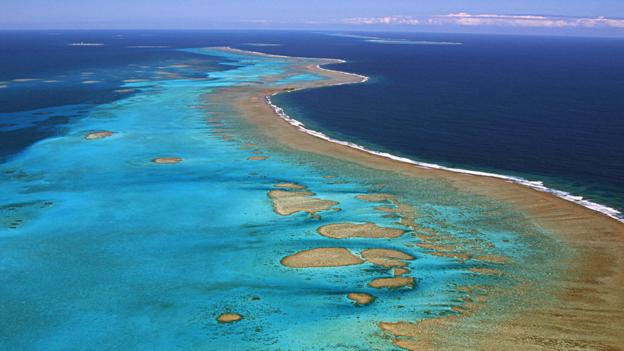
Corals are likely to suffer as a result of the changes to our oceans

The health of the world’s oceans is deteriorating even faster than had previously been thought, a report says.

A review from the International Programme on the State of the Ocean (IPSO), warns that the oceans are facing multiple threats.

They are being heated by climate change, turned slowly less alkaline by absorbing CO2, and suffering from overfishing and pollution.

The report warns that dead zones formed by fertiliser run-off are a problem.

It says conditions are ripe for the sort of mass extinction event that has afflicted the oceans in the past.

It says: “We have been taking the ocean for granted. It has been shielding us from the worst effects of accelerating climate change by absorbing excess CO2 from the atmosphere.

“Whilst terrestrial temperature increases may be experiencing a pause, the ocean continues to warm regardless. For the most part, however, the public and policymakers are failing to recognise - or choosing to ignore - the severity of the situation.”

It says the cocktail of threats facing the ocean is more powerful than the individual problems themselves.

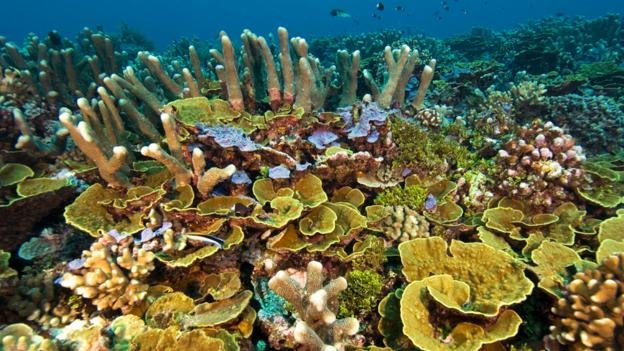
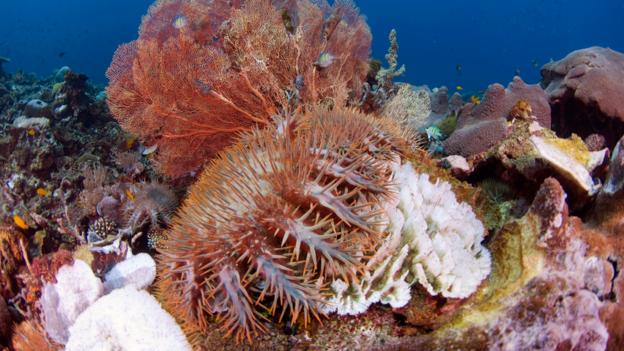
Coral reefs, for instance, are suffering from the higher temperatures and the effects of acidification whilst also being weakened by bad fishing practices, pollution, siltation and toxic algal blooms.

Carbon dioxide level passes 400 ppm - global warming

Carbon dioxide passes symbolic mark - Noaa atmospheric lab - The measurements are made at a station on the Mauna Loa volcano The level of carbon dioxide in the atmosphere has risen above 400 parts per million for the first time in human history, US researchers say. The "Keeling Lab" in Hawaii has the longest continuous measurement of the greenhouse gas, which is a key driver of climate change. Thursday's measurement, made atop the Mauna Loa volcano, registered 400.03. The last time CO2 was regularly above 400ppm was about 3-5 million years ago - before modern humans existed. The climate back then was also considerably warmer than it is today, according to scientists. The usual trend seen at the volcano is for the CO2 concentration to rise in winter months and then to fall back as the northern hemisphere growing season kicks in and pulls some of the gas out of the atmosphere. This means the number can be expected to decline by a few ppm in the coming weeks. But the long-term trend is upwards. When the late Charles Keeling began recording CO2 concentrations at the volcano in 1958, they were around 315 ppm (parts per million by volume - that is 315 molecules of CO2 for every one million molecules in the air). Every year since then, the curve has squiggled resolutely higher.

Endangered Coral Reefs in steep decline

Are we losing all of our coral reefs?


Oil sands pollutes freshwater ecosystems

Oil sands' toxins accumulate in freshwater ecosystems

 
 AP)
 
Studies have shown that oil sands operations lead to pollutants being released into water systems
 

Toxic pollutants released by oil

sands mining operations are accumulating in freshwater ecosystems, research by

Canadian scientists suggests.

A study of sediment in nearby lakes showed the level of pollutants, known as

PAHs, had risen since the 1960s when oil sands development began.

However, the researchers added that PAH concentrations were still lower than

those found in urban lakes.

The findings appear in the Proceedings of the

National Academy of Sciences


.

PAH refers to polycyclic aromatic hydrocarbons - a group of chemicals that

have been shown to affect aquatic organisms and birds. PAHs have also been

described as being responsible for damaging food crops.

The chemicals occur naturally in coal, crude oil, and petroleum; they are

also present in products made from fossil fuels, such as creosote and asphalt.

PAHs also can be released into the air during the burning of fossil fuels and

organic matter - the less efficient the burning process, the more PAHs are given

off. Forest fires and volcanoes produce PAHs naturally.

The Anthropocene - Humans Shaping the Planet

 
Construction site in Egypt      


At the Planet Under Pressure conference in London, Diana Liverman and Will Steffen present something of a contrasting couple.

The two professors have been working together on a State of the Planet

report, which has involved trawling through numerous reports and scientific

papers. At the end of it all, the message of one appears somewhat optimistic,

the other fundamentally pessimistic.

They agree that changes to the world since about 1950 have been startling -

rapid spread of the human population, accelerating exploitation of forests and

marine resources, surging economic growth in successive waves across the world,

and so on.

This radical reshaping of the natural world by a single species is certainly

unprecedented in Earth history, which a few years back led to scientists Paul

Crutzen and Eugene Stoermer coining a special name for our epoch - the Anthropocene.

If you accept the premise that we have entered the Anthropocene, one of the

over-arching questions is "what happens now?"; another is "can we get out of

it?"

Prof Liverman, who studies social aspects of global change at the University

of Arizona, has the task of assessing the societal trends that either indicate

Population and Consumption must decrease for livable future

Obese boy doing exercise

Consumption levels are now high  


enough in some developing countries as to become a concern


Over-consumption in rich countries

and rapid population growth in the poorest both need to be tackled to put

society on a sustainable path, a report says.

An expert group convened by the Royal Society spent nearly two years reading evidence and writing their

report.

Firm recommendations include giving all women access to family planning,

moving beyond GDP as the yardstick of economic health and reducing food

waste.

The report will feed into preparations for the Rio+20 summit in June.

"This is an absolutely critical period for people and the planet, with

profound changes for human health and wellbeing and the natural environment,"

said Sir John Sulston, the report's chairman.

"Where we go is down to human volition - it's not pre-ordained, it's not the

act of anything outside humanity, it's in our hands."

UN team examines mining threat to Great Barrier Reef

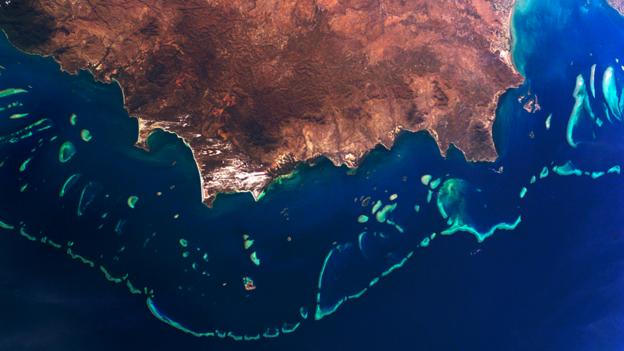
File photo: Great Barrier Reef    

The Great Barrier Reef off the Queensland coast is home to a wealth of marine life

A UN team has arrived in Australia to investigate possible damage to the Great Barrier Reef by the mining industry.

Fears that coal exports and oil and gas exploration would jeopardise the reef prompted the Unesco delegation's visit.

Environmentalists have urged the government to suspend mining development until a government review is completed.

The reef is home to 400 types of coral and 1,500 species of fish.

The Great Barrier Reef, which holds Unesco World Heritage

status, lies off the coast of the state of Queensland, which is the

largest producer of coal in the country.

The Unesco team is scheduled to visit the reef for a week

before making recommendations to the World Heritage committee. They will

also meet members of the government.

Environmentalists are concerned that an increase in coal

production and the shipping traffic that would follow could affect the

Great Barrier Reef's World Heritage status.

They want the government to suspend all new developments

while a state and federal review of the health of the reef is carried

out.

Pages