Languages

great barrier reef

English

Massive coral bleaching killing Australia's Great Barrier Reef - 2016

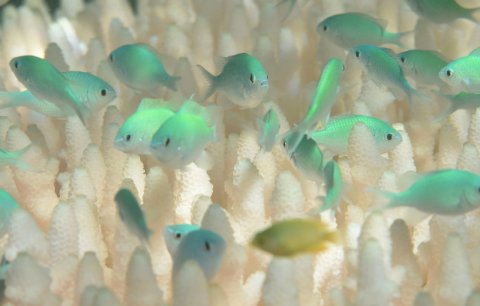
Fish swim amid bleached coral near Lizard Island, Australia, Great Barrier Reef
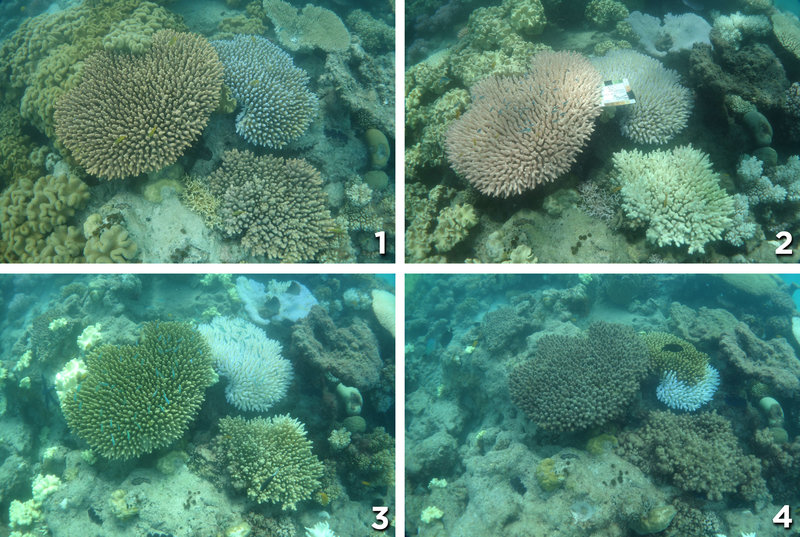
Coral - 4 stages of coral healthy, bleached, algal growth voer bleached dead coral
Coral - 4 stages of coral - healthy, bleached, algal growth voer bleached dead coral
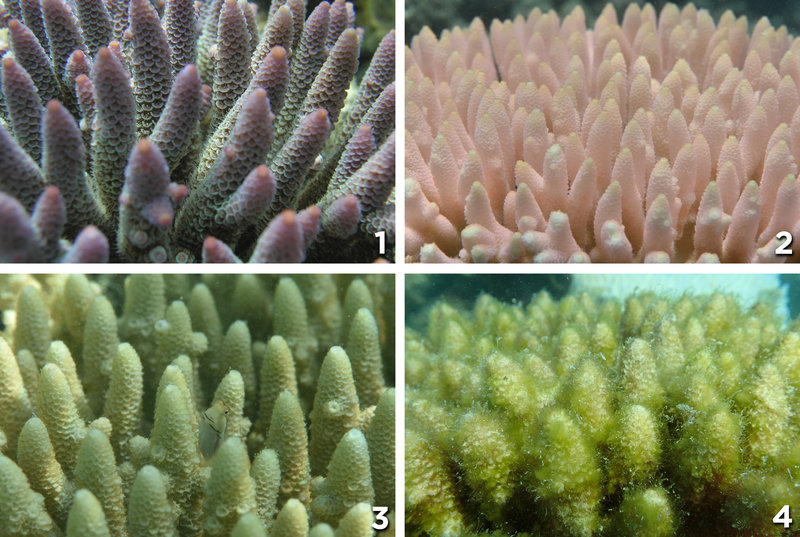
Close-up of four staes of coral bleaching dying coral great barrier reef australia
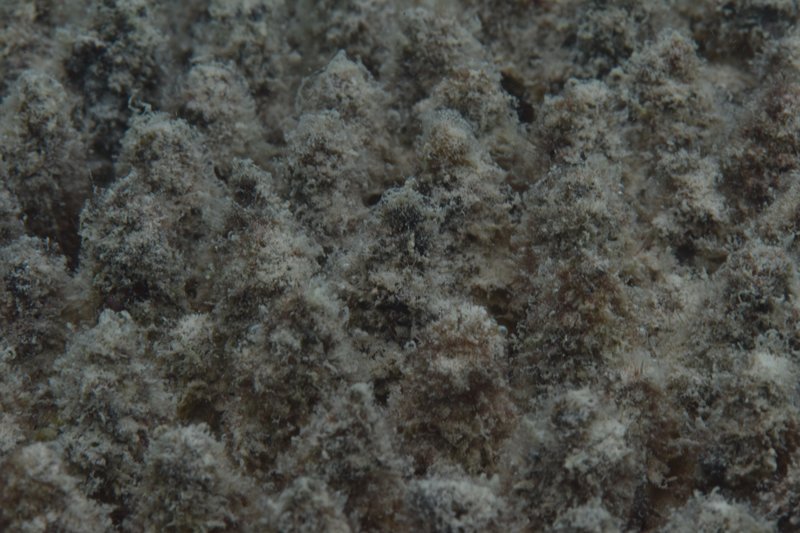
heavy algal overgrowth over bleached dying coral - Great Barrier Reef Australia

The massive bleaching hitting the Great Barrier Reef off the coast of Australia is likely that country's "biggest ever environmental disaster," says Dr. Justin Marshall, who has studied the reef for three decades.

Fish swim amid bleached coral near Lizard Island, Australia, Great Barrier Reef

Only 7 percent of the reef has escaped bleaching, according to researchers at the ARC Center of Excellence. Marshall, a professor at the University of Queensland, says the destructive phenomenon is happening in an area the size of Scotland.

"Before this mass bleaching started, we already were at the point of losing 50% of the coral cover on the Great Barrier Reef. This, I think, will probably take another 50% off what was left," Marshall says.

Over the course of the last six months, Marshall and his colleagues with the citizen science project Coral Watch have documented the degradation of reef structures near Lizard Island, one of the worst-hit areas.

They photographed the same formations of coral multiple times, showing clearly the pace of the destruction.

Killer starfish threaten Great Barrier Reef

Killer starfish threaten Great Barrier Reef

Crown-of-thorns starfish have a voracious appetite and waves of carnivorous starfish are eating their way through Australia's Great Barrier Reef - and sugar cane farming is being blamed.

Researchers at Australia's Institute of Marine Science (AIMS), just outside Townsville, Queensland, in north-east Australia, have mapped the pattern of destruction.

"Coral cover is half of what it was 27 years ago, coral cover is going down at an alarming rate." Dr Katharina Fabricius, coral reef ecologist and AIMS principal research scientist, told the BBC World Service programme Discovery.

She said the biggest culprit was the Crown of Thorns Starfish (COTs).

"There are three main sources for the coral decline, one is storms, however 42% is attributed to Crown of Thorns Starfish - and just 10% due to bleaching. This compares with 70% due to bleaching for reefs elsewhere in the world , such as in the Caribbean."

“Crown of Thorns are very fecund animals - each female can produce between five and 20 million eggs ”
John Brodie, James Cook University

Bleaching occurs when corals are stressed by changes in conditions such as temperature, light, or nutrients. They expel the symbiotic algae living in their tissues, causing them to turn completely white.

Australian scientists are now looking at ways to reduce the destruction wreaked by starfish, which have the ability to smother coral and digest the fleshy parts.

Half of Great Barrier Reef coral lost in last 27 years.


Various factors, from cyclones to the Crown of Thorns starfish,

are being blamed for the loss of the reef.

Australia's Great Barrier Reef has lost more than half its coral cover in the past 27 years, a new study shows.

Researchers analysed data on the condition of 217 individual reefs that make

up the World Heritage Site.

The results show that coral cover declined from 28.0% to 13.8% between 1985

and 2012.

They attribute the decline to storms, a coral-feeding starfish and bleaching

linked to climate change.

The research is published in the Proceedings of the National Academy of

Sciences journal.

Glen De'ath from the Australian Institute of Marine Science (AIMS) and

colleagues determined that tropical cyclones - 34 in total since 1985 - were

responsible for 48% of the damage, while outbreaks of the coral-feeding

crown-of-thorns starfish accounted for 42%.

Two severe coral bleaching events in 1998 and 2002 due to ocean warming also

had "major detrimental impacts" on the central and northern parts of the reef,

the study found, putting the impact at 10%.

"This loss of over half of initial cover is of great concern, signifying

habitat loss for the tens of thousands of species associated with tropical coral

UN team examines mining threat to Great Barrier Reef

File photo: Great Barrier Reef    

The Great Barrier Reef off the Queensland coast is home to a wealth of marine life

A UN team has arrived in Australia to investigate possible damage to the Great Barrier Reef by the mining industry.

Fears that coal exports and oil and gas exploration would jeopardise the reef prompted the Unesco delegation's visit.

Environmentalists have urged the government to suspend mining development until a government review is completed.

The reef is home to 400 types of coral and 1,500 species of fish.

The Great Barrier Reef, which holds Unesco World Heritage

status, lies off the coast of the state of Queensland, which is the

largest producer of coal in the country.

The Unesco team is scheduled to visit the reef for a week

before making recommendations to the World Heritage committee. They will

also meet members of the government.

Environmentalists are concerned that an increase in coal

production and the shipping traffic that would follow could affect the

Great Barrier Reef's World Heritage status.

They want the government to suspend all new developments

while a state and federal review of the health of the reef is carried

out.

Email Addresses