Languages

birds

English

Birds Aren’t Just Declining. They’re Declining Faster - 2026.

Scientists studying data collected over more than three decades found accelerating losses. Their research offers clues about the causes.

Birds in the United States are not only declining, but they are declining faster, especially in areas with intensive agriculture, according to new research. Overall drops in bird population, measured from 1987 to 2021, were sharpest in warm and warming areas, suggesting that climate change may play a role.

The study, published on Thursday in the journal Science, shows only correlation with intensive agriculture and temperature, not causation. It does not factor in other circumstances that may be affecting birds along migratory routes or while they are overwintering. But it adds to an ever more robust body of evidence that birds — one of the best measured families of animals on Earth, and a sentinel for the health of other species — are not OK.

Whatever the specific drivers, the accelerating losses make sense given society’s focus on economic growth, which often comes at a cost to the natural world, said Peter P. Marra, an ornithologist and dean at Georgetown University who specializes in bird populations and was not involved with the new research.

“The American dream turns into the American nightmare as we start to look at what we’re doing to biodiversity and systems that we depend on as humans,” he said.

2014 Rarest Birds

The 100 most distinct and rare birds

Philippine's eagle: The Philippine's eagle is at number eight
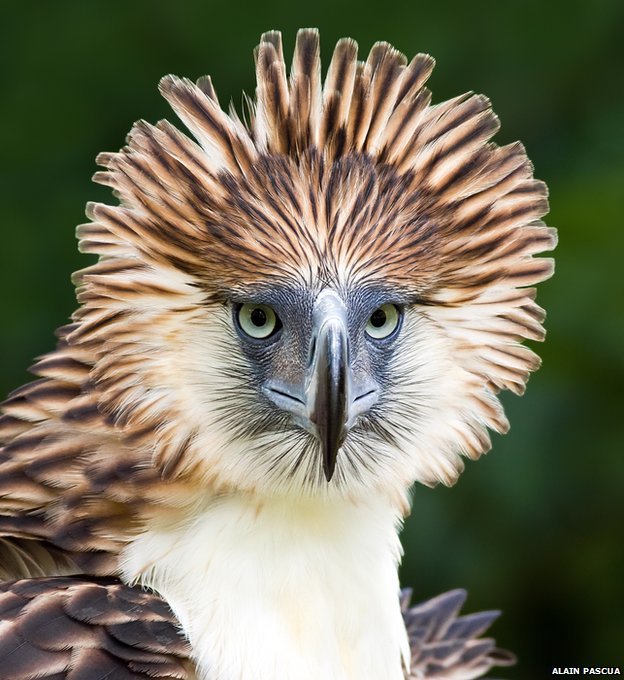
philippines-eagle.jpg

The world's 100 most distinctive and endangered birds have been determined.

Scientists in the UK and US chose the birds based on their rarity, but also how distinctive their appearance, behaviour and evolutionary history was.

The list of birds contains several of the world's largest and most striking, as well as other unusual species threatened with extinction.

Included are the tooth-billed pigeon, known as the little dodo, the Philippine's eagle and a type of kiwi.

Scientists at the Zoological Society of London (ZSL), UK and Yale University in New Haven, Connecticut, US created the list as part of the EDGE of Existence programme, which seeks to document the most uniquely vulnerable species on the planet.

Details of the exercise are published in the journal Current Biology.
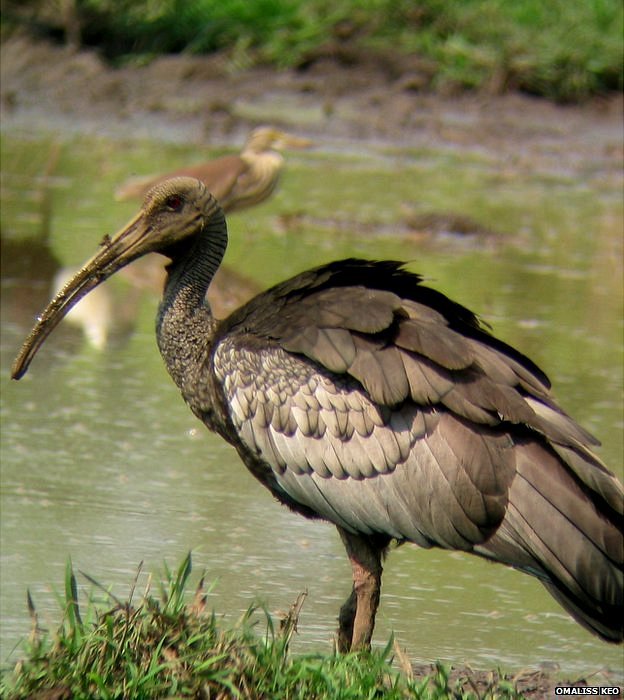
giant-ibis.jpg
Giant ibis. The giant ibis stands tall at the top of the list
At number one is a bird called the giant ibis.

The largest member of the ibis and spoonbill family, the giant ibis stands over a metre tall, weighs 4.2kg and is the national bird of Cambodia. Despite this, fewer than 230 pairs remain.